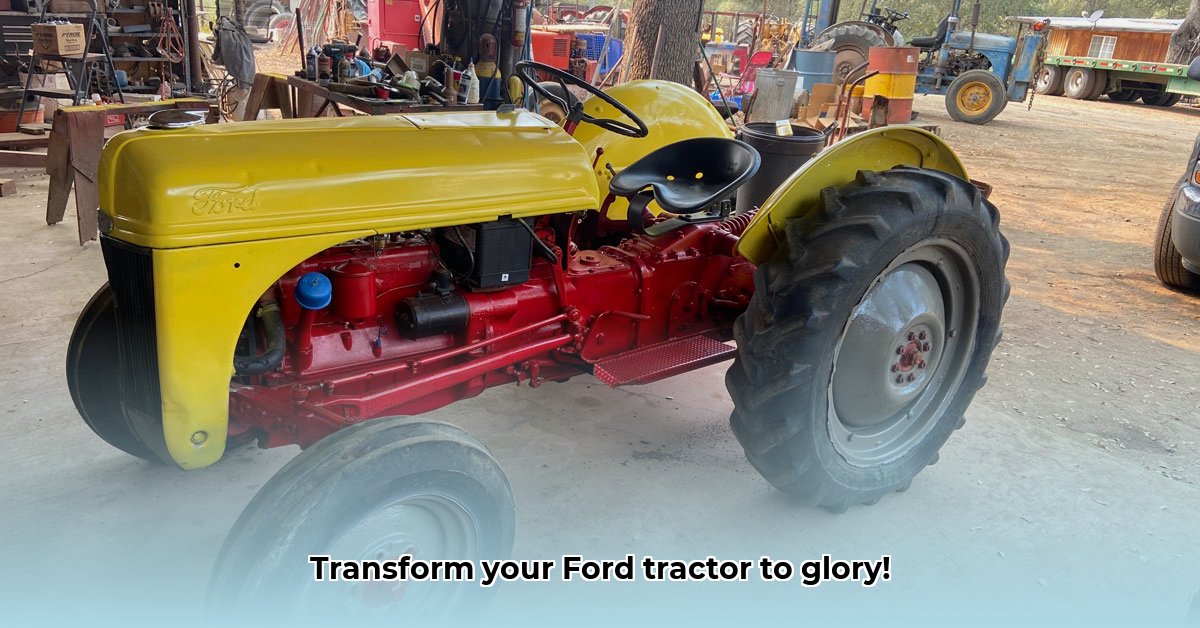
A rusty, blue-coated husk. That's what Robert Smith saw when he first encountered his 1964 Ford 2000 tractor. But beneath the layers of neglect, he envisioned a vibrant, sunshine-yellow workhorse, ready to roar back to life. This isn't just a restoration story; it's a compelling case study in perseverance, community, and the rewarding process of bringing a piece of agricultural history back to its former glory. This guide will walk you through Robert’s journey, offering actionable insights and valuable lessons for your own vintage tractor restoration project. For more on Ford tractors, check out this helpful resource: Ford Tractor Info.
Unearthing a Hidden Legacy: The Discovery Phase
The tractor's initial state was far from ideal. Years of weathering had taken their toll, coating the once-pristine metal in layers of faded blue paint, rust, and accumulated grime. But Robert, with his love for vintage machinery, saw beyond the surface. He suspected a vibrant yellow lay hidden beneath, a secret waiting to be revealed. His initial research into Ford tractor paint schemes revealed a complex landscape of yellows, each subtly different depending on the year and model. Could he find the exact shade used for his 1964 Ford 2000?
He discovered a cryptic marking, "C318," stamped on a hidden part. This intriguing code became the focus of his investigation, a key to unlocking the tractor's past. Online forums became invaluable resources, connecting him with other enthusiasts who helped him decipher the markings. Was it a factory code? A production batch number? The mystery fueled his determination. This phase was less about restoration and more about historical detective work.
The Restoration Process: A Step-by-Step Guide
Robert's restoration was a methodical journey, divided into manageable stages:
Disassembly: The tractor was carefully taken apart, each component meticulously labeled and photographed. This crucial step allowed Robert to assess the damage and plan the necessary repairs. This stage, while time-consuming, is essential for a successful outcome.
Cleaning and Preparation: Removing years of accumulated dirt, rust, and paint required specialized tools and techniques. Wire brushes, scrapers, and chemical strippers were carefully employed to clean the metal surfaces without causing further damage. It was a painstaking process, but essential for achieving a quality finish.
Parts Sourcing: This proved to be the most challenging phase. Many original parts were unavailable, necessitating creative problem-solving. Online forums and specialized vintage tractor suppliers became vital allies. Robert's perseverance and connections within the community were instrumental in tracking down hard-to-find components.
Paint Matching: Finding the precise shade of Ford tractor yellow required persistence. Robert tested multiple samples until he achieved a perfect match, carefully comparing it to any remaining original paint. The final color perfectly captured the tractor's original glory, a testament to his dedication to authenticity.
Reassembly: This was the culmination of all his efforts. Each part was carefully reassembled, ensuring the correct placement and function of every component. It's a testament to the meticulous nature of this process that everything worked as planned.
Community, Collaboration, and the Power of Shared Knowledge
Robert's success wasn't solely due to his individual efforts. The online vintage tractor community played a crucial role. He engaged with other enthusiasts, sharing his progress, seeking advice, and receiving invaluable support. This collaborative approach expedited the restoration process and provided crucial insights, highlighting the power of shared passion.
Overcoming Challenges and Celebrating Triumphs
Robert encountered numerous challenges, from sourcing rare parts to deciphering cryptic markings. Yet, through perseverance and the assistance of the online community, he overcame each hurdle. The restored tractor, gleaming in its original yellow, stands as a testament to his dedication and the power of collaboration. The "C318" marking, despite remaining a mystery, adds a touch of intrigue to the tractor's story.
Key Takeaways and Actionable Insights
- Meticulous documentation is key: Photograph and label each step of the disassembly and reassembly process.
- Community engagement is invaluable: Online forums provide access to a wealth of knowledge and support.
- Patience and persistence are essential: Tractor restoration is a time-consuming process requiring dedication.
- Accurate paint matching enhances authenticity: Invest time in finding the correct color shade.
- Proper cleaning is crucial: Clean each part thoroughly before reassembly.
Robert Smith's restoration of his Ford 2000 tractor is more than just a mechanical achievement; it's a celebration of perseverance, community, and the enduring appeal of vintage machinery. His story inspires us to appreciate the meticulous detail and passion involved in restoring these remarkable machines.